
Many California employers use bonuses to reward performance, recognize milestones, or incentivize productivity. But what some businesses may not realize is that certain bonus payments can also affect overtime calculations under California wage-and-hour laws.
In practice, this issue often arises when a bonus is processed separately through payroll and treated as a stand-alone payment — without considering whether it should also be factored into an employee’s “regular rate of pay.”
That distinction matters because California law may require some forms of compensation, including certain bonuses and incentive payments, to be included when calculating overtime obligations. And when a payroll practice is applied consistently across a workforce, even a small miscalculation can potentially create broader wage-and-hour exposure.
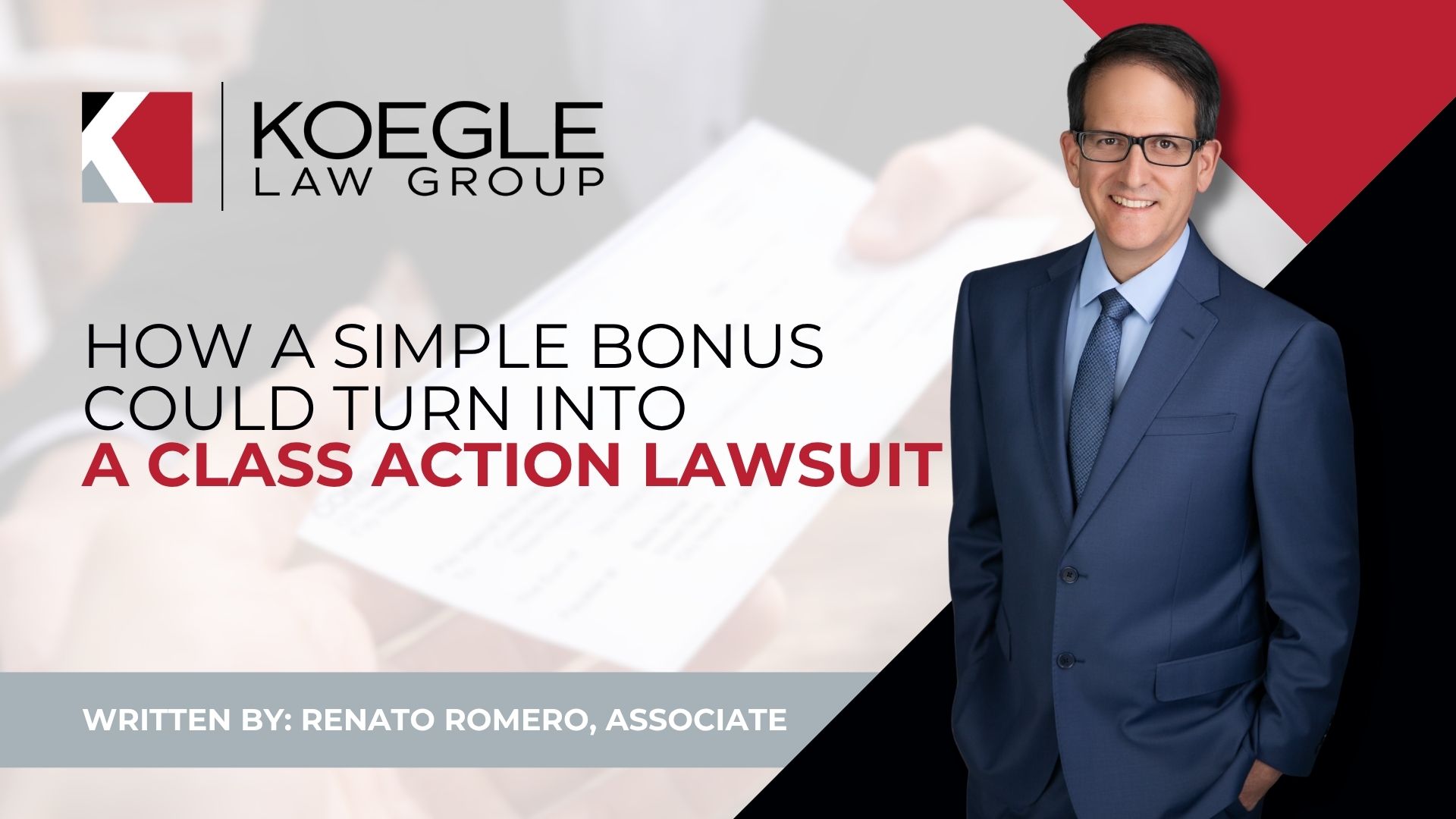
In a recent article, Renato Romero, Associate Attorney at Koegle Law Group, examines how seemingly routine bonus practices can raise larger compliance concerns for California employers.
The article discusses:
- Why some bonuses may need to be included in overtime calculations
- The difference between discretionary and non-discretionary bonus structures
- The importance of periodic payroll and compliance reviews as businesses grow
For business owners, HR professionals, and managers, these issues highlight the importance of regularly reviewing compensation practices—especially as organizations implement new incentive structures, performance programs, or retention strategies.
At Koegle Law Group, we work with California employers to provide practical, business-focused guidance on wage-and-hour compliance, workplace policies, and proactive risk management strategies designed to support long-term operational stability.
Read the full article here: How a Simple Bonus Could Turn Into a Class Action Lawsuit
DISCLAIMER: This client alert is provided for informational purposes only and does not constitute legal advice. The information contained herein may not reflect the most current legal developments. You should consult with qualified legal counsel before taking any action based on the information in this alert. Receipt of this alert does not create an attorney-client relationship.
This article was originally published by Koegle Law Group, proudly serving businesses in Santa Clarita and beyond. This communication may be considered advertising material under the rules of professional conduct governing lawyers in California.